
Teeth Whitening
Making a Difference — One Smile At A Time
Visit the dentist who brings heart to modern dental care.
Teeth Whitening in Bowling Green, KY
Coffee, tea, red wine, and plain time all leave their mark on enamel. The change is gradual enough that most people do not notice until they see themselves in a photograph. Cox Family Dentistry offers professional teeth whitening that lifts years of staining safely, with your gums protected and your teeth examined first. Dr. Cox will tell you plainly what whitening can do for your smile and what it cannot.
What Is Professional Teeth Whitening?
It is a peroxide gel strong enough to break apart the stain molecules trapped inside your enamel, applied under a dentist’s supervision. Drugstore strips and whitening toothpastes work on the outer surface only, which is why they lift a shade or two at best and then stall. Because the gel in our office is prescription strength, we isolate your gums before it goes on, and the result goes deeper and arrives faster. It is also supervised, which matters more than most people expect. A dentist checking for decay, recession, and cracked enamel first is the difference between a treatment that works and one that turns a small problem into a painful one.
What Causes Teeth to Stain and Darken?
Staining comes from two directions at once. Surface stains sit on the enamel and come from what you eat, drink, and smoke. Tooth discoloration from the inside develops with age, injury, or certain medications taken in childhood. The usual culprits:
- Coffee, tea, and red wine
- Tobacco in any form
- Dark sodas, berries, and tomato-based sauces
- Thinning enamel, which lets the yellow dentin underneath show through
- An old injury to a single tooth, which can darken it on its own
Surface stained teeth respond beautifully. Deeper discoloration sometimes needs bonding or veneers instead, and we will say so upfront.
How Does In-Office Whitening Compare to Take-Home Trays?
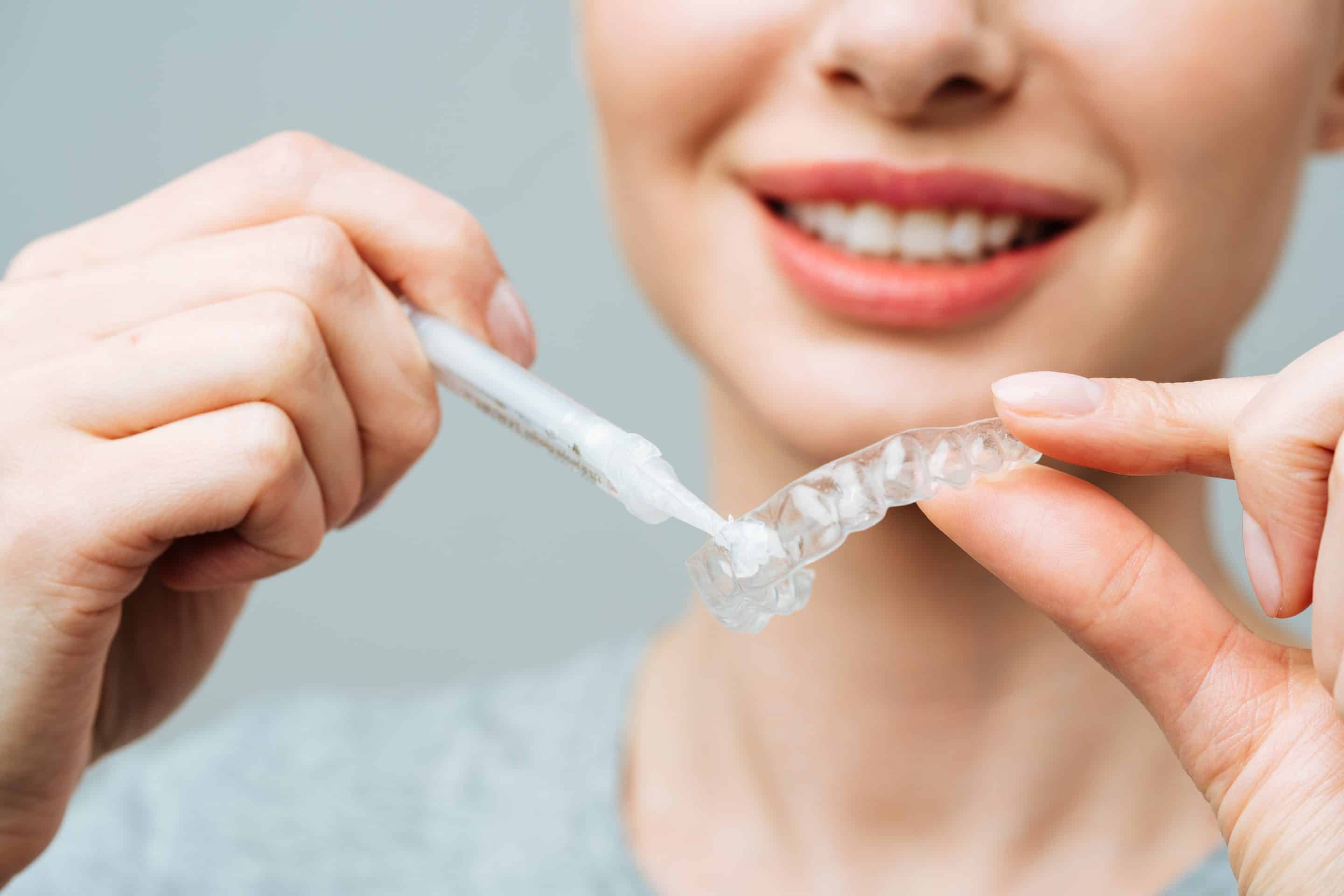
Chairside treatment is faster, and take-home whitening trays are more gradual and easier to control. During an in-office visit we protect your gums and apply the gel in timed cycles, and you walk out with a visible difference the same day. Custom trays let you whiten a little at a time across one to two weeks, which suits anyone whose teeth run sensitive. Plenty of patients do both, using a chairside session to set the shade and trays to hold it there. If you have an event on the calendar, tell us the date. Two weeks of lead time gives us room to do it the gentler way rather than rushing the enamel.
Which System Does Our Office Use?
We use SDI Pola Day, a 35 percent carbamide peroxide gel made with built-in desensitizing agents. The concentration does the lifting, while the added potassium nitrate and fluoride calm the nerve response that makes some patients wince partway through. Dr. Cox chooses the strength and the wear time based on your enamel, your starting shade, and how your teeth have handled whitening in the past.
How Much Brighter Will My Smile Get?
Most patients lighten several shades, and yellow-toned teeth respond best of all. Gray and brown tones lift more slowly and sometimes only part of the way. We record your starting point on a shade guide at the first appointment and check it against the same guide at the end, so the change is measured rather than remembered. If what you want is beyond what a whitening treatment can deliver, you will hear that before you spend anything. Teeth also have a natural ceiling, and chasing a shade past it produces a flat, artificial look rather than a brighter one. Our aim is the brightest version of your own teeth, not somebody else’s.
Does Whitening Cause Tooth Sensitivity?
Some patients feel short bursts of cold sensitivity during treatment and for a day or two afterward. It is temporary, and it does not harm the tooth. Sensitivity shows up more often in people who already have gum recession, exposed roots, or untreated decay, which is exactly why we examine you before any gel is placed. Starting a desensitizing toothpaste a week before treatment heads it off for most people. Desensitizing toothpaste, fluoride rinses, and shorter wear times resolve it for nearly everyone, and the research on peroxide whitening and tooth sensitivity backs that up.
How Long Do the Results Last?
Anywhere from several months to a couple of years, and the range is that wide because habits drive it. Someone who drinks black coffee every morning will see dulling sooner than someone who does not, no matter how well the initial treatment went. Touch-ups with your trays keep the shade steady, and a professional cleaning removes the surface film that makes teeth look darker than they really are. Once you have custom trays, maintaining the result costs very little, since a single syringe of gel covers several short touch-ups spread across the year.
Will It Work on Crowns, Veneers, or Fillings?
No. The gel only changes natural tooth structure, so porcelain and composite restorations stay exactly the shade they were made in. That matters most on front teeth. If you have a crown or a bonded filling that shows when you smile, we whiten first, let the color settle for a couple of weeks, then match the new restoration to it. Doing it the other way around leaves you with a mismatch that is expensive to fix, since the restoration would have to be remade rather than adjusted.
How Much Does Whitening Cost?
It depends on whether you choose chairside treatment, custom trays, or a combination. Whitening is cosmetic, so dental insurance generally does not contribute, and we quote the fee before you commit to anything. Patients without coverage often ask about our Healthy Smiles Program, an in-house savings plan that reduces the cost of the exam and cleaning that go hand in hand with cosmetic care. Compared with buying strips and kits year after year with mediocre results, a supervised treatment usually turns out to be the better value.
How Do I Keep My Smile Bright Afterward?
The first two days matter most, because enamel is rehydrating and picks up color more easily than usual. After that, ordinary habits do the work:
- Avoid deeply colored food and drink for the first 48 hours
- Use a straw for iced coffee, tea, and soda
- Rinse with water after anything dark
- Brush twice daily and keep your cleanings on the calendar
- Run a short touch-up with your trays every few months
Why Choose Cox Family Dentistry for Whitening
Dr. Kevin Cox, DMD completed his biology degree, his dental degree, and his general practice residency at the University of Kentucky, and he has spent over 20 years caring for families. He is a member of the American Dental Association, serves as a Major in the U.S. Army Reserves, and has made two dental mission trips to Guatemala.
Patients come back because nobody here oversells. Whitening is one part of our broader cosmetic dentistry care, and it sits alongside the preventive and restorative dental services that keep a bright smile healthy long after treatment ends.
Brighten Your Smile with Dr. Cox
A whiter smile is one of the quickest changes we can make, and it starts with a simple exam. Call our office or send a request through our appointment request form to schedule a visit at our Bowling Green, KY practice. We will check your enamel and gums, talk through chairside treatment versus trays, and recommend the option that fits your teeth and your timeline. Making a difference, one smile at a time, is the whole point.